
ProDentim for Gum Disease: Can It Support Gum Health?
Exploring how probiotics support periodontal health and strong gums.
Bleeding gums and gum disease are among the most common oral health concerns in the US, and the question of whether ProDentim for gums can make a meaningful difference is one that deserves a serious, evidence-based answer. This article looks at the clinical research behind the probiotic strains in this supplement, what the science says about oral probiotics and periodontal health, and what realistic expectations look like for someone adding it to their routine. If you’re ready to try it,
Check the official ProDentim offer here
or read the full breakdown first.
Table of Contents
- Understanding Gum Disease: What You’re Actually Dealing With
- How Oral Probiotics Interact With Gum Health
- The Research Behind ProDentim for Gums
- ProDentim for Gums: Key Strains and What They Do
- What Clinical Studies Say About L. reuteri and Bleeding Gums
- ProDentim for Gums: What to Realistically Expect
- The Honest Limits: What ProDentim Cannot Replace
- Ready to Support Your Gum Health?
- FAQ
Understanding Gum Disease: What You’re Actually Dealing With
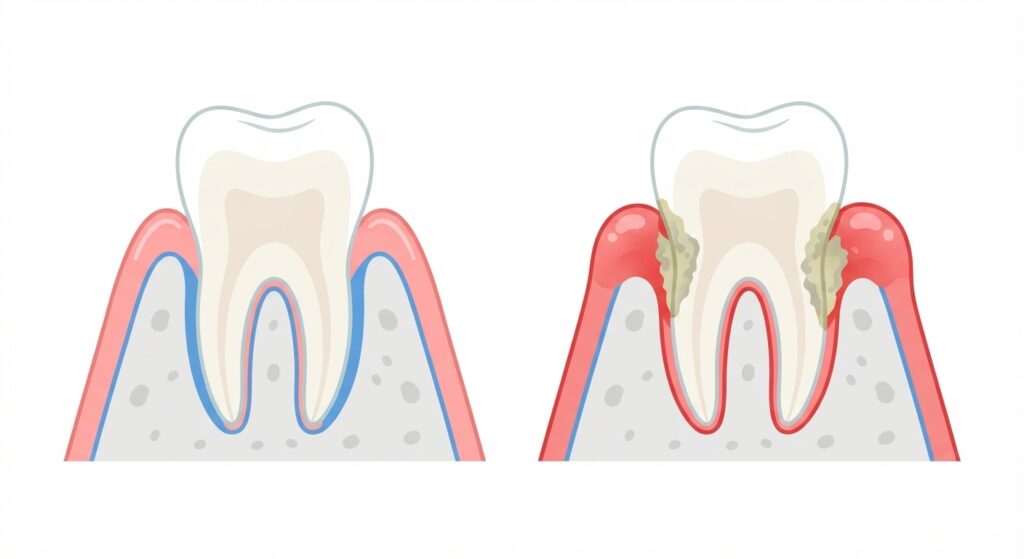
Before evaluating ProDentim for gums, it helps to understand what gum disease actually is. Gum disease exists on a spectrum. Gingivitis is the earliest and most reversible stage — it involves gum inflammation, swelling, and bleeding caused by bacterial plaque accumulating at the gum line. Left unaddressed, gingivitis can progress to periodontitis, where the infection spreads below the gum line, damages the bone and connective tissue supporting the teeth, and eventually leads to tooth loss.
The root cause at both stages is a bacterial imbalance — harmful anaerobic bacteria dominating the oral environment and triggering an inflammatory immune response in the gum tissue. Standard treatment focuses on removing plaque mechanically (brushing, flossing, professional scaling) and sometimes using antibacterial agents to reduce pathogen load.
The logic behind ProDentim for gums follows a different pathway: instead of attacking bacteria, it attempts to shift the bacterial population toward beneficial strains that compete with and displace the harmful ones, reducing the inflammatory burden naturally over time.
How Oral Probiotics Interact With Gum Health
The connection between oral probiotics and gum health is better supported by research than many people realize. Beneficial probiotic strains — particularly Lactobacillus reuteri and Lactobacillus paracasei — interact with the gum environment through several mechanisms:
- Competitive exclusion — beneficial bacteria physically occupy surface areas where pathogenic bacteria would otherwise colonize, reducing their population density.
- Antimicrobial compound production — L. reuteri produces a compound called reuterin, which has been shown to inhibit the growth of key periodontal pathogens including Porphyromonas gingivalis.
- Inflammatory modulation — certain probiotic strains reduce pro-inflammatory cytokines (TNF-α, IL-1β, IL-8) in gum tissue, which directly reduces swelling and bleeding.
- Immune support — probiotics interact with the mucosal immune system in the oral cavity, helping to regulate the immune response rather than simply suppressing it.
These mechanisms explain why ProDentim for gums is a scientifically plausible approach — even if the evidence for the finished ProDentim product specifically remains limited.
The Research Behind ProDentim for Gums

This is the most important section for anyone making a serious decision about ProDentim for gums. The evidence operates at two levels: research on the individual strains in the formula, and research on oral probiotics broadly.
On L. reuteri specifically: A randomized, double-blind, placebo-controlled trial published in the Journal of Periodontology demonstrated that supplementation with L. reuteri significantly reduced bleeding of the gums compared to placebo. A separate randomized controlled trial found that L. reuteri as an adjunct to standard scaling and root planing produced significantly better outcomes than scaling alone — with gingival bleeding index, plaque index, and pocket depth all improving more in the probiotic group. A 2025 meta-analysis in Clinical Oral Investigations reviewing 23 randomized controlled trials found that oral probiotics reduced gingival bleeding scores by an average of 28% and decreased plaque index by 18% compared to placebo groups.
On L. paracasei: Research published in Beneficial Microbes found that L. paracasei reduced gingival bleeding by approximately 34% over 12 weeks in patients with mild periodontitis, through competitive inhibition of pathogenic P. gingivalis and modulation of inflammatory cytokines in gum tissue.
The important distinction: This research is on specific bacterial strains, not on the finished ProDentim product formula. ProDentim contains L. reuteri, but the clinical trials used specific strain designations at specific doses. Whether ProDentim’s formulation precisely replicates the trial conditions is not publicly confirmed by the manufacturer. This is the honest framing of the evidence for ProDentim for gums.
ProDentim for Gums: Key Strains and What They Do
Understanding ProDentim for gums means looking at each relevant ingredient:
Lactobacillus Reuteri — the single most researched oral probiotic strain for periodontal health. Multiple published trials link it to reduced gingival bleeding, reduced pocket depth, and plaque control. It produces reuterin, an antimicrobial substance that inhibits key periodontal pathogens. This is the strongest strain in the ProDentim for gums argument.
Lactobacillus Paracasei — shown to reduce salivary pathogenic bacterial counts and gingival bleeding through competitive exclusion. Also linked to sinus health support, relevant since sinus drainage can affect the oral bacterial environment.
B. Lactis BL-04® — primarily studied for immune balance and mucosal barrier support. In the oral context, a healthier immune response means less excessive inflammation, directly relevant to gum tissue swelling and sensitivity.
Inulin (prebiotic) — a prebiotic fiber that feeds beneficial bacterial strains, helping the introduced probiotics colonize more effectively and maintain their population over time.
Together, these create the ProDentim for gums rationale — though the combination at ProDentim’s specific dosage has not itself been the subject of a published clinical trial.
What Clinical Studies Say About L. reuteri and Bleeding Gums
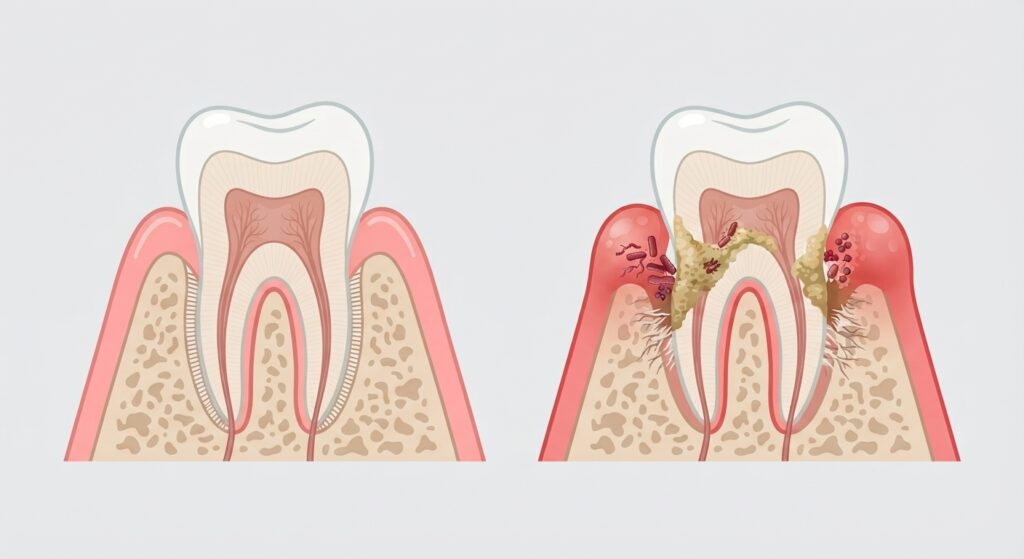
The clinical picture for L. reuteri is worth detailing for anyone researching ProDentim for gums seriously:
- A study by Vivekananda et al. found patients receiving L. reuteri lozenges showed significant improvement in gingival index, gingival bleeding index, and plaque index — and L. reuteri alone outperformed scaling plus placebo in some measures.
- The Journal of Periodontology RCT (72 healthy sailors, 42-day intervention) showed L. reuteri significantly reduced gum bleeding compared to placebo without any additional professional dental intervention — a particularly relevant finding for supplement users.
- Research through NCBI and MDPI’s Applied Sciences confirms that L. reuteri produces reuterin that inhibits P. gingivalis (the primary bacteria implicated in gum disease) and improves gingival indices.
- A systematic review found effects lasting beyond the supplementation period, suggesting lasting microbiome change rather than purely temporary effects.
This is among the strongest ingredient-level evidence for any supplement in the oral health category — and a key part of why ProDentim for gums is worth discussing seriously rather than dismissing as pure marketing.
ProDentim for Gums: What to Realistically Expect
Based on available research and real-world user feedback, here is a realistic assessment of ProDentim for gums:
Likely supportive benefits with consistent use (8-12 weeks):
- Gradual reduction in gum sensitivity and bleeding during brushing or flossing
- Reduced gum puffiness and swelling over time as inflammation decreases
- A more comfortable gum line with less irritation after eating or drinking
- Improvement in overall bacterial balance, which may slow plaque accumulation
Timeline: Clinical trials showing the strongest results used supplementation periods of 42 days to 12 weeks. Two-week use is unlikely to show significant gum changes — patience is essential when evaluating ProDentim for gums.
Who benefits most: People with early-stage gingivitis (gum redness, occasional bleeding during brushing) are the most plausible candidates for a meaningful response from ProDentim for gums. Those with more advanced periodontitis need professional periodontal treatment regardless of any supplement.
The Honest Limits: What ProDentim Cannot Replace
Being honest about ProDentim for gums means being clear about what it is and isn’t:
ProDentim cannot:
- Treat diagnosed periodontal disease as a standalone intervention
- Replace professional scaling and root planing for established gum disease
- Regenerate bone or tissue already lost to advanced periodontitis
- Be substituted for twice-daily brushing and daily flossing
- Replace your dentist or periodontist for ongoing gum health monitoring
ProDentim can reasonably:
- Support the gum tissue environment with research-backed probiotic strains
- Provide an adjunctive layer of bacterial balance support on top of good hygiene
- Potentially reduce minor bleeding and gum irritation over a consistent trial period
The American Dental Association and the American Academy of Periodontology both emphasize that gum disease requires professional diagnosis and treatment. If you have symptoms beyond occasional minor bleeding — persistent pain, loose teeth, significant recession, or deep pockets diagnosed by a dentist — see a periodontist before relying on any supplement.
Ready to Support Your Gum Health?

If you have early-stage gum sensitivity or minor bleeding and want to add a research-backed probiotic layer to your oral hygiene routine, ProDentim for gums is a reasonable supplement to try alongside professional care. The 60-day money-back guarantee limits your financial risk if results don’t meet expectations — provided you purchase direct from the official store.
👉 Visit the Official ProDentim Website & Check Today’s Packages
For related reading, see our [ProDentim Benefits] guide, [How to Take ProDentim] for the correct daily routine, and [ProDentim Customer Reviews & Complaints] for real buyer feedback.
FAQ
Can ProDentim help with bleeding gums? The L. reuteri strain in ProDentim for gums has been studied in multiple randomized controlled trials and shown to reduce gingival bleeding index scores. However, these trials used specific strain designations and dosages — ProDentim contains the same strain but has not itself been the subject of an independent clinical trial.
Is ProDentim effective for gum disease? ProDentim for gums contains strains with genuine periodontal research behind them, particularly L. reuteri. However, it should be considered a supportive supplement — not a treatment for diagnosed gum disease. Established periodontitis requires professional dental care.
How long does it take for ProDentim to improve gum health? Based on the clinical literature, meaningful gum health changes from oral probiotics typically appear over 6-12 weeks of consistent daily use. Two to four weeks may show early signs of reduced sensitivity, but a fair trial requires longer.
Can I use ProDentim instead of going to the dentist for gum disease? No. ProDentim for gums is designed as an adjunct — an additional layer on top of standard care — not a replacement for professional treatment. If you have diagnosed gum disease, professional scaling and root planing is the established standard of care.
Is ProDentim safe for people with gum disease? The probiotic strains in ProDentim are generally considered safe for healthy adults. However, if you have a diagnosed periodontal condition, immune system issues, or are on medication for gum disease, always check with your dentist or periodontist before adding any supplement.